Toddler Hits When They Don't Get Their Way: What To Do
By LookIt editorial team. Created with AI assistance. Published . General parenting information, not a diagnosis or individual medical advice.
When your child hits, interrupt the aggression and set a clear, calm limit. Once things are calmer, teach and practise a safer way to express anger. Hitting alone does not tell you the quality of your attachment. Seek pediatric advice if aggression is persistent, causes injury, or leaves you worried about anyone’s safety.
When your toddler hits or lashes out because they don't get their way, it signals they're overwhelmed by big feelings and need help managing them. To respond effectively, calmly stop the hitting, acknowledge their feelings, and gently hold your limit. This approach teaches them that all feelings are okay, but all behaviors are not.
Why Toddler Hitting Happens
It’s incredibly common for children to save their biggest reactions and most intense feelings for the people they feel safest with – often, that’s you. When your child hits or melts down with you but behaves differently with others, it’s not a sign you’re failing. Instead, it shows they trust you deeply. They feel secure enough to let out all those challenging emotions they might be holding in elsewhere. They are still learning how to understand and manage these big feelings. When they don't get their way, frustration, anger, or disappointment can feel overwhelming, and hitting can be an immediate, though unhelpful, way to express that intensity.
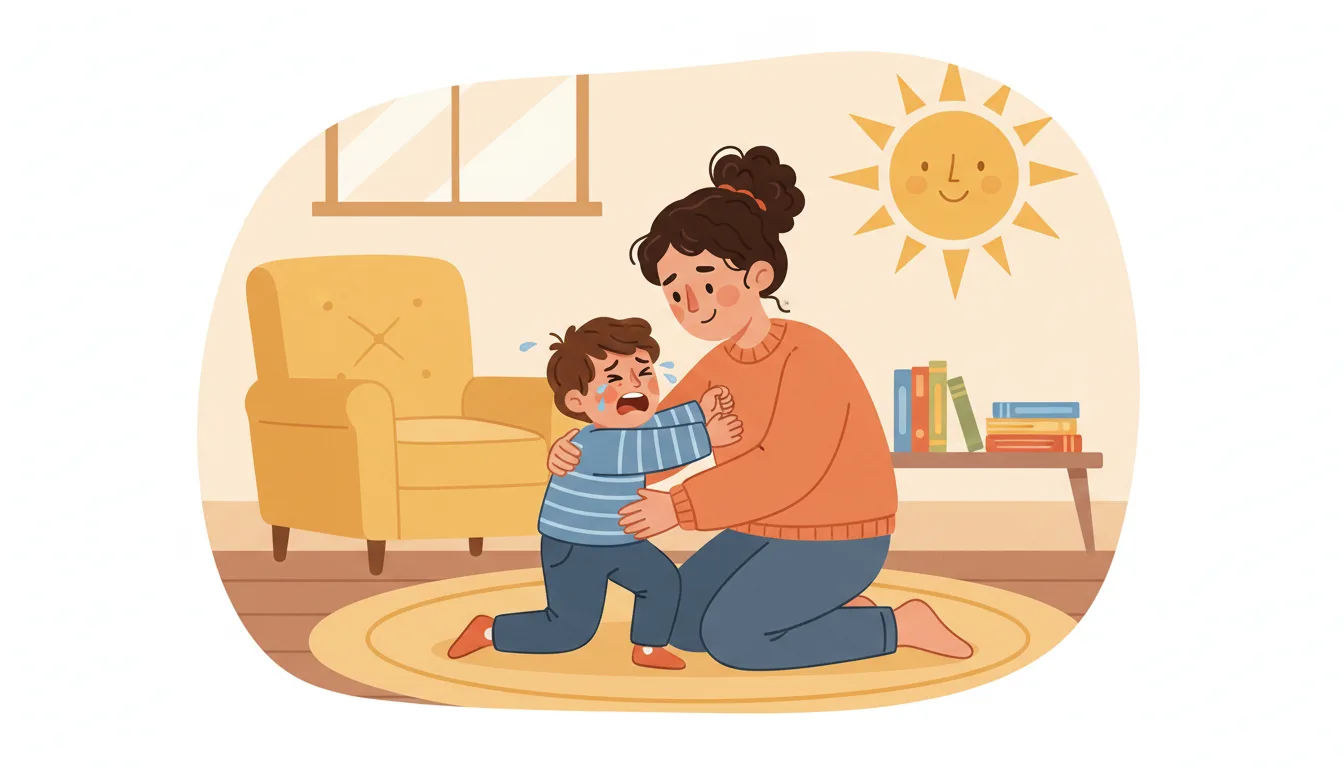
How to Respond to Toddler Hitting When Angry
When your child hits, the first step is to interrupt the aggression and set a clear, calm limit. You can find more guidance here if your child hits because they aren't getting their way. Gently but firmly stop the hitting. You might place a hand on their arm or step in between them and what they’re hitting, saying something like, "I won't let you hit." Make sure you're calm and clear. Your goal here is to interrupt the behavior, not to punish the feeling. Once the immediate aggression is stopped, you can then move to teaching safer ways to express anger.
Tonight You Can: Addressing Toddler Aggression
After you've interrupted the hitting, you can try a few specific things to help your child learn a different path.
Acknowledge their feeling even as you state the limit. This step involves letting your child know you see their feelings, while still holding the boundary. For example, if they hit because they don't want to leave the park, you could say, "I see you're really mad that it's time to go, and we still need to leave now." The "and" is key here – it connects your understanding with the reality of the limit. This isn't about agreeing with their feeling or changing the limit; it's about making space for their experience. You're showing them that even big, uncomfortable feelings are allowed, but hitting is not the way to express them. This helps them feel heard, which can sometimes lower the intensity of their frustration.
Help them name their emotion out loud. Children often act out because they don't have the words for what they're feeling. You can offer those words. Try saying, "You seem really frustrated right now," or "Are you feeling angry that you can't have another turn?" Giving a name to the emotion helps your child begin to understand what's happening inside them. Over time, this skill of naming feelings can help them pause between feeling upset and reacting with hitting. It gives them a tool to communicate their internal experience in a more helpful way. Why a small mistake turns into a meltdown touches on how overwhelming big emotions can be for young children. Additionally, understanding when your child won't say sorry can offer further insight into related social-emotional learning.
Notice and praise a small moment of cooperation. After the intensity passes, look for any small sign of cooperation, however brief. Maybe they took one step towards the door after refusing, or they stopped hitting even for a moment. You could say, "I noticed you took a deep breath when you were still feeling upset. That was helpful," or "Thank you for getting your shoes on, even though you didn't want to leave." This isn't about rewarding the meltdown; it’s about shining a light on any effort they make to manage their feelings or follow directions. It shows them what you want to see more of and reinforces those positive choices.
What Not To Worry About
It’s easy to worry that hitting means you've somehow failed, or that your child is intentionally trying to be difficult. You don't need to carry that worry. Hitting alone does not tell you the quality of your attachment. This behavior doesn't mean you're a bad parent or that your child is being purposefully defiant. Instead, it's often a sign of their strong, secure connection with you. They feel safe enough with you to show their biggest, most challenging feelings. It’s part of how they learn about their emotions and how to navigate limits.
Related Terms: Understanding Toddler Hitting
Navigating instances of toddler hitting frustration can be challenging. By understanding how to stop toddler hitting when angry through calm redirection and consistent boundaries, you can help your child learn to manage big emotions. Setting clear toddler aggression limits provides them with the structure they need to develop more appropriate ways to express themselves.
Key Takeaways
Toddler hitting often stems from big feelings they can't yet verbalize, not defiance.
Your child trusts you enough to show their most intense emotions.
Calmly stop the hitting, acknowledge their feelings, and firmly hold your limits.
Help them name emotions and praise any small efforts at cooperation.
Seek pediatric advice if aggression is persistent, causes injury, or leaves you worried about anyone’s safety.
When to seek help
Most children go through phases of expressing big feelings through physical actions like hitting or biting. Seek pediatric advice if aggression is persistent, causes injury, or leaves you worried about anyone’s safety. A developmental pediatrician or a child psychologist can offer strategies tailored to your family's needs and help you understand what's driving the behavior.
Sources
3 cited- 01
Patterns of Attachment: A Psychological Study of the Strange Situation
- 02
Wiley, 2010
- 03
American Academy of Pediatrics, 2021
References identify works used for the underlying answer; they are not an endorsement of this article. How we use sources and review answers.
Questions parents also ask
My 12-month-old throws a tantrum when I say no to a biscuit or take something away, should I comfort him, or is it better to let him try to calm down on his own?
You're not doing him harm by staying close and comforting him while you still say no to the biscuit, warmth and a held limit aren't opposites, they work together. At this age, letting him cry it out alone isn't a discipline strategy that builds confidence; it's just leaving him to struggle with a feeling his brain can't yet handle by himself.
Why won't my child stop whining no matter what I try, even when I stay completely consistent?
Whining around one transition, the TV going off every evening, usually isn't a sign you've done anything wrong, or that he's testing you. It's what happens when a child whose self-control is still developing hits the moment where what you're asking and what he wants collide hardest. Staying consistent is right; it works best paired with a way to wind down, and a way to ask for you that isn't whining.
Read the full answer →Why does my child refuse to listen and only melt down or act out with me, when she's fine for everyone else?
Nothing is wrong with her, and nothing is wrong with you: kids reliably save their whining, defiance, and meltdowns for the one person they feel safest falling apart with, almost always the primary attachment figure. It isn't disrespect and it isn't something you're doing wrong, it's a sign your bond is strong enough to hold her worst moments.
Why won't my 3-year-old listen, and why does he melt down every time I tell him he can't do something?
This isn't a discipline failure and it doesn't mean he'll always be like this, at 3, hearing "no" or "you're not allowed to" genuinely feels like a small crisis to him, because his brain can't yet absorb a limit and stay calm about it at the same time. The meltdowns are real and exhausting, and they are also developmentally on-schedule, not a sign that your consistency isn't working.