Puzzles · Play together
Twenty-question mystery
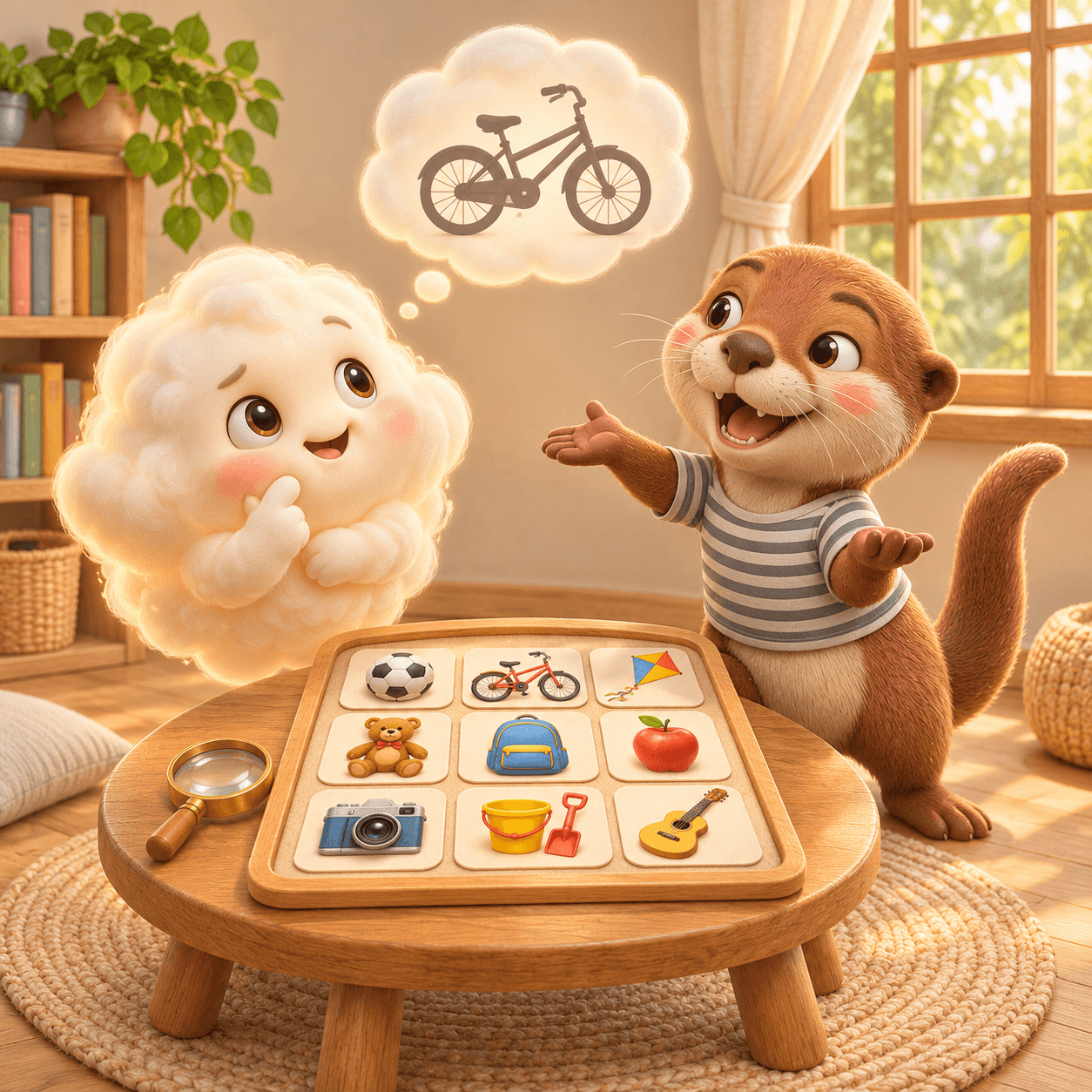
Twenty-question mystery is a 10-minute puzzle game for ages 6–8 to play with a grown-up. Think of a familiar object without saying its name. Agree on a broad category if useful. Choosing questions that eliminate possibilities practices classification and reasoning.
- Suggested age
- 6–8 years
- Play time
- About 10 minutes
- Play with
- A grown-up
What you need
Just yourselves and a comfortable space. No toys or equipment needed.
How to play twenty-question mystery
- Think of a familiar object without saying its name. Agree on a broad category if useful.
- The detective asks questions you can answer yes or no, such as whether it is alive or usually found indoors.
- After each answer, narrow the possibilities. Swap roles when the object is found or after twenty questions; share a helpful clue if needed.
What your child practices
Choosing questions that eliminate possibilities practices classification and reasoning.
Let the game grow with them
Make it easier. Use a known category and offer a clue after three questions.
Add a little challenge. Try to solve it in ten questions and discuss which question helped most.
Follow their interest and comfort. Age ranges are starting points, and these games are not developmental assessments.
A note for grown-ups
Counting questions is optional; keep the mystery shared rather than competitive.
Why we describe skills through play
The skill notes describe what this activity asks children to do. They are practical play guidance, not a promise of progress or a test of your child. Harvard’s guide to brain-building through play explains the broader role of games in practicing attention, memory and self-control; it has not reviewed this individual game.