Talk to baby constantly or read cues? Do both.
By LookIt editorial team. Created with AI assistance. Published . General parenting information, not a diagnosis or individual medical advice.
There's no real contradiction here, 'talk to your baby constantly' and 'read her cues' are two halves of the same skill, not competing methods. You don't have to choose between narrating your day out loud and watching her face; the goal is to do both together, adjusting how and when you talk based on what she's telling you with her body.
Many parents hear two pieces of advice that can feel like they pull in opposite directions: talk to your baby constantly, and also watch their cues and body language. It's completely normal to feel unsure which one to prioritize, but these aren't competing methods. Instead, they’re two halves of the same skill, designed to work together to help you truly connect with your baby and support their early language development.
Serve and Return Baby Language
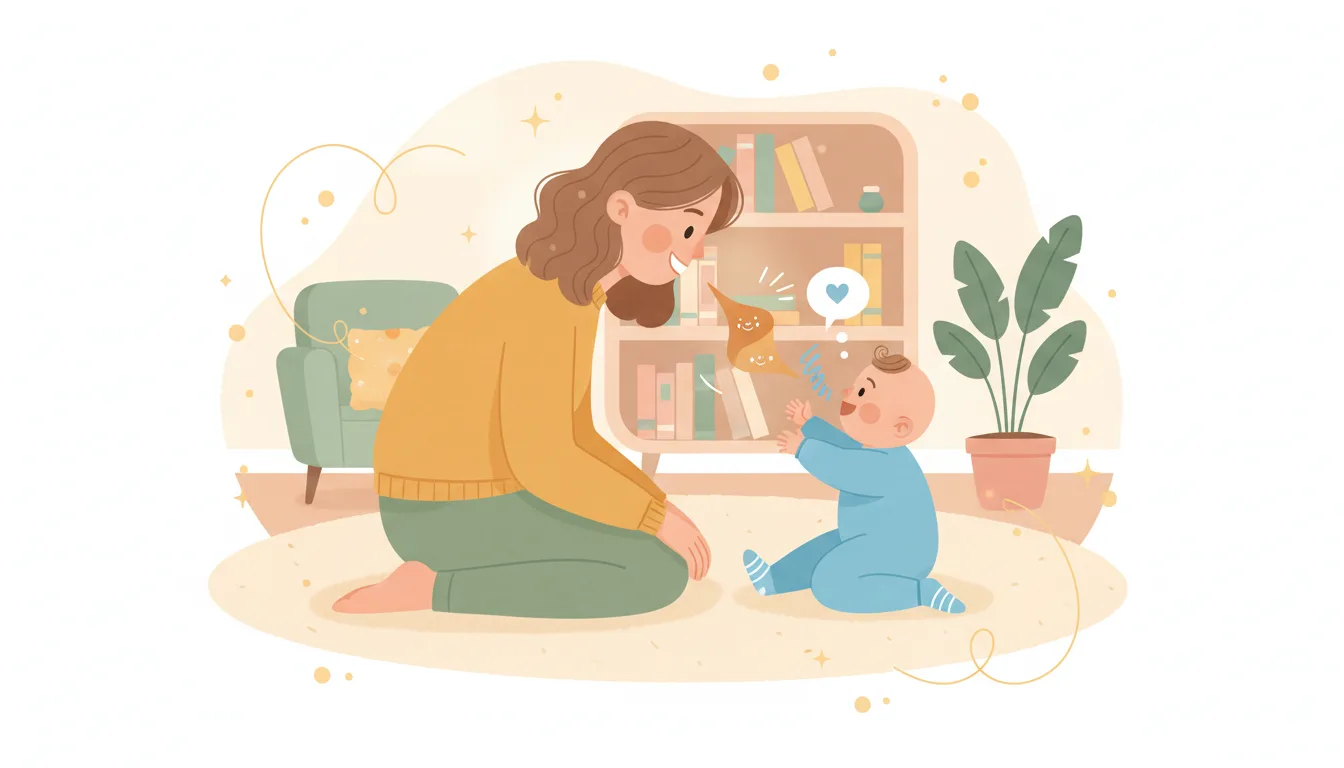
The feeling that you have to choose between narrating your day and closely watching your baby’s face is very common. It’s easy to feel confused when it sounds like you’re being told to do two contradictory things at once. Your baby actually builds language through an exchange called "serve and return", where they 'serve' by making sounds, gestures, or looking, and you 'return' by responding with eye contact, words, or a hug. This means they learn not just by hearing words from you, but also by having you respond to what they’re telling you with their own expressions and movements.
Simply talking at your baby, even a lot, isn't as effective as talking with them. That's where their cues come in. Your baby’s body language, like looking away, going still, reaching toward you, or even a soft coo, is their way of communicating. These signals aren't interruptions to your talking; they’re their 'serve' or their way of guiding the interaction, telling you, "I need a pause," or "I'm really interested in this, keep going!" By paying attention to these subtle messages, you help your words land more effectively, making your conversations more meaningful and impactful for their development. Watching their cues isn't a separate, competing method; it's what makes the talking truly connect and build those crucial early communication pathways.
Tonight you can
You don't have to choose between talking and watching. Here are a few ways to practice doing both together, starting tonight.
Narrate what you're doing and pause when she signals
During everyday routines like a feed or a diaper change, try narrating what you’re doing in a simple running commentary. You might say, "Time to change your diaper, let's lift your legs," or "Here comes your warm bottle." While you’re talking, keep a gentle eye on your baby’s face and body. If she looks away, stiffens, or squirms, take a brief pause in your narration. This isn't about stopping entirely, but giving her a moment. You’re showing her that you hear her silent message, and she learns that her communication is important and effective. When she re-engages, you can pick up where you left off.
Pick two signals to watch for
It can feel overwhelming to try and notice every tiny shift in your baby’s expression. Instead, pick just two signals to focus on tonight. Choose one cue that tells you she's engaged and interested, like reaching out a hand, making eye contact, or a soft coo. Then, pick one cue that suggests she might need a break or a slower pace, such as turning her head away, going very still, or a slight fuss. Focusing on just these two will help you become more attuned to her communication without feeling like you need to decode everything at once. With practice, you’ll naturally start noticing more.
Treat her cues like a dimmer switch
Think of your baby’s cues not as an on-off switch for your talking, but more like a dimmer switch. You don't have to stop talking altogether when she signals she needs a break. Instead, you can adjust the intensity of your interaction. If she seems a little overwhelmed or looks away, try softening your voice, slowing your pace, or simply taking a short pause. You might continue to describe what you’re doing in a quieter tone, giving her space to process. If she seems engaged and eager, you can continue your conversation at a natural, warm pace. This subtle adjustment allows you to keep the interaction flowing while respecting her individual pace and needs.
What not to worry about
Feeling confused about how to balance different pieces of advice is extremely common for parents. Reading a baby's cues is a subtle skill that takes time and practice to develop; it's not something anyone is expected to know instinctively. You are not "getting it wrong" if you're still learning to interpret her signals. There's also no single "right" amount of talking that you need to hit each day. The quality of the interaction – being responsive and engaged – matters more than just the sheer volume of words, which is supported by research on effective language development. Every time you try to connect and adjust based on your baby's unique responses, you're doing exactly what she needs.
What we don't know
While the value of responsive interaction is widely supported, the precise amount or type of verbal interaction that is "optimal" for every child isn't a fixed number. Research into the nuances of early language development continues to evolve. However, what remains consistently clear is that integrating your words with your baby's unique signals creates a powerful and effective way for them to build language skills. The goal isn't a prescribed amount of talk, but a flexible, engaged connection.
Document-level references are not listed for this article. How we use sources and review answers.